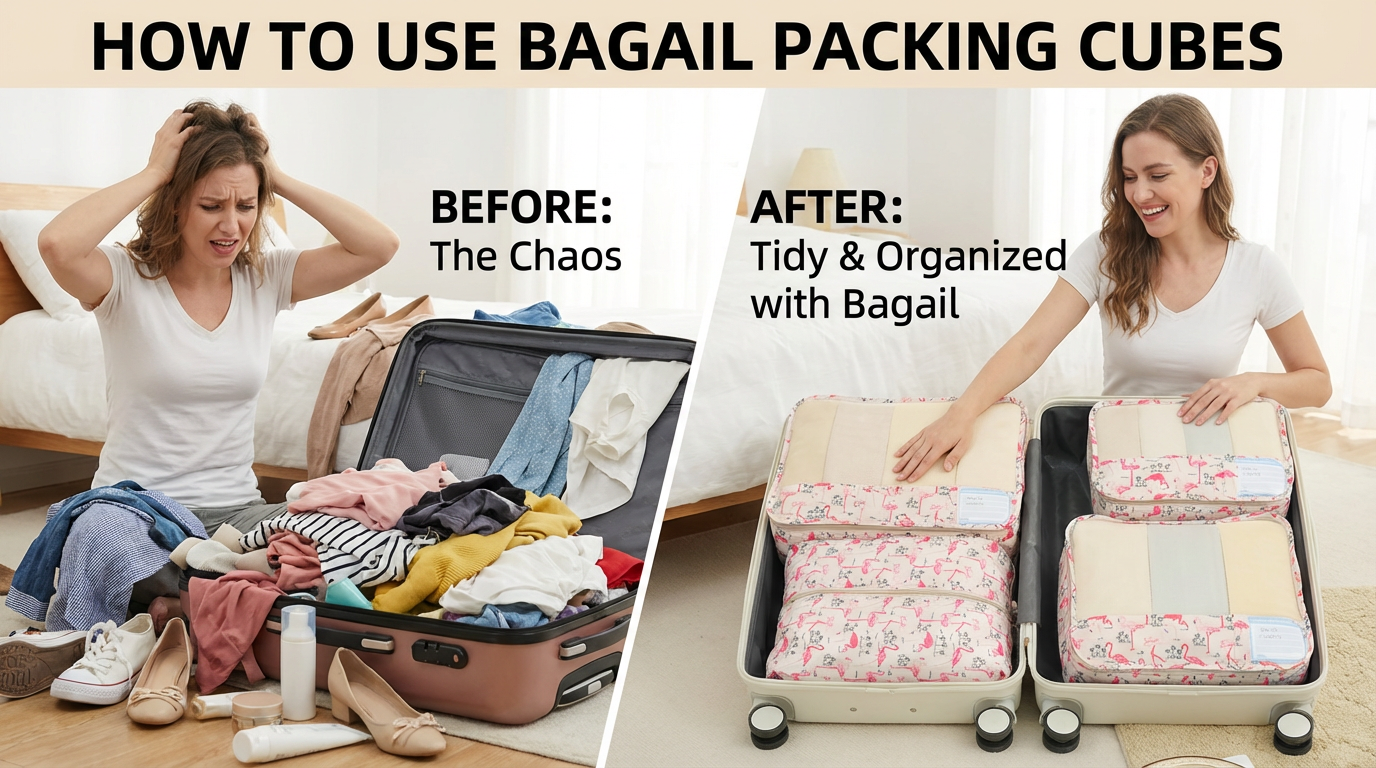
How to Use Packing Cubes to Maximize Space
A practical Bagail guide for sorting clothes, choosing the right cube size, and arranging luggage so items stay easy to find.
TL;DR — Quick Answer
Citable summaryPacking cubes work best when you sort clothes by category first, fold or roll them neatly, place each category in the right size cube, and then arrange the cubes in your suitcase without leaving unused gaps. Keep heavier cubes low and near the wheels for stability, and move cubes directly into a drawer or shelf when you arrive.
Why Use Packing Cubes?
A suitcase can quickly become difficult to manage when clean clothes, worn items, shoes, toiletries, and travel essentials are mixed together. Packing cubes create separate zones inside the same bag, so travelers can pack by category, compress loose piles into rectangular units, and find items without unpacking the entire suitcase.
Key Takeaways
- Sort and categorize clothes before packing to make items easier to find during the trip.
- Use folding and rolling together to save space and reduce wrinkles.
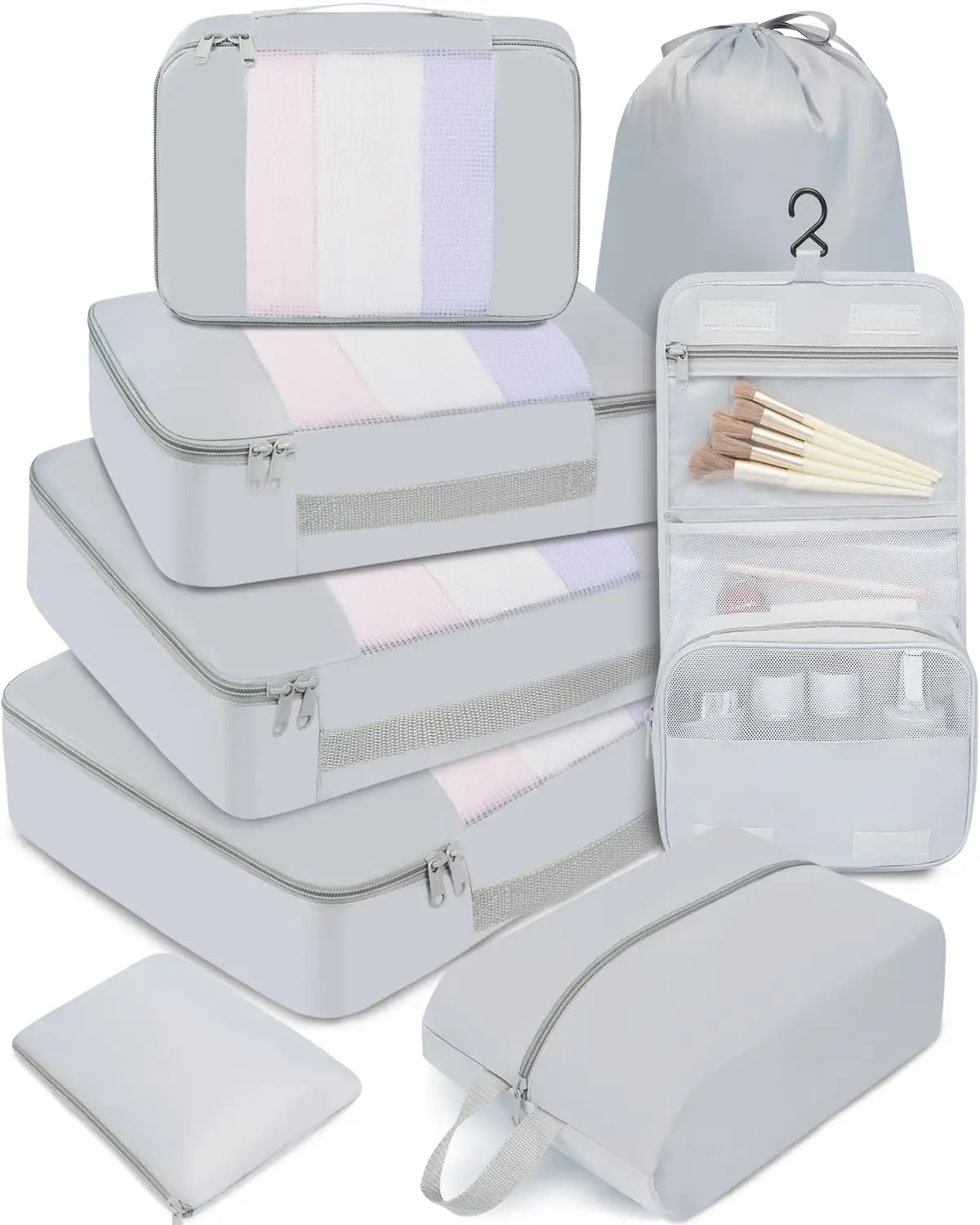
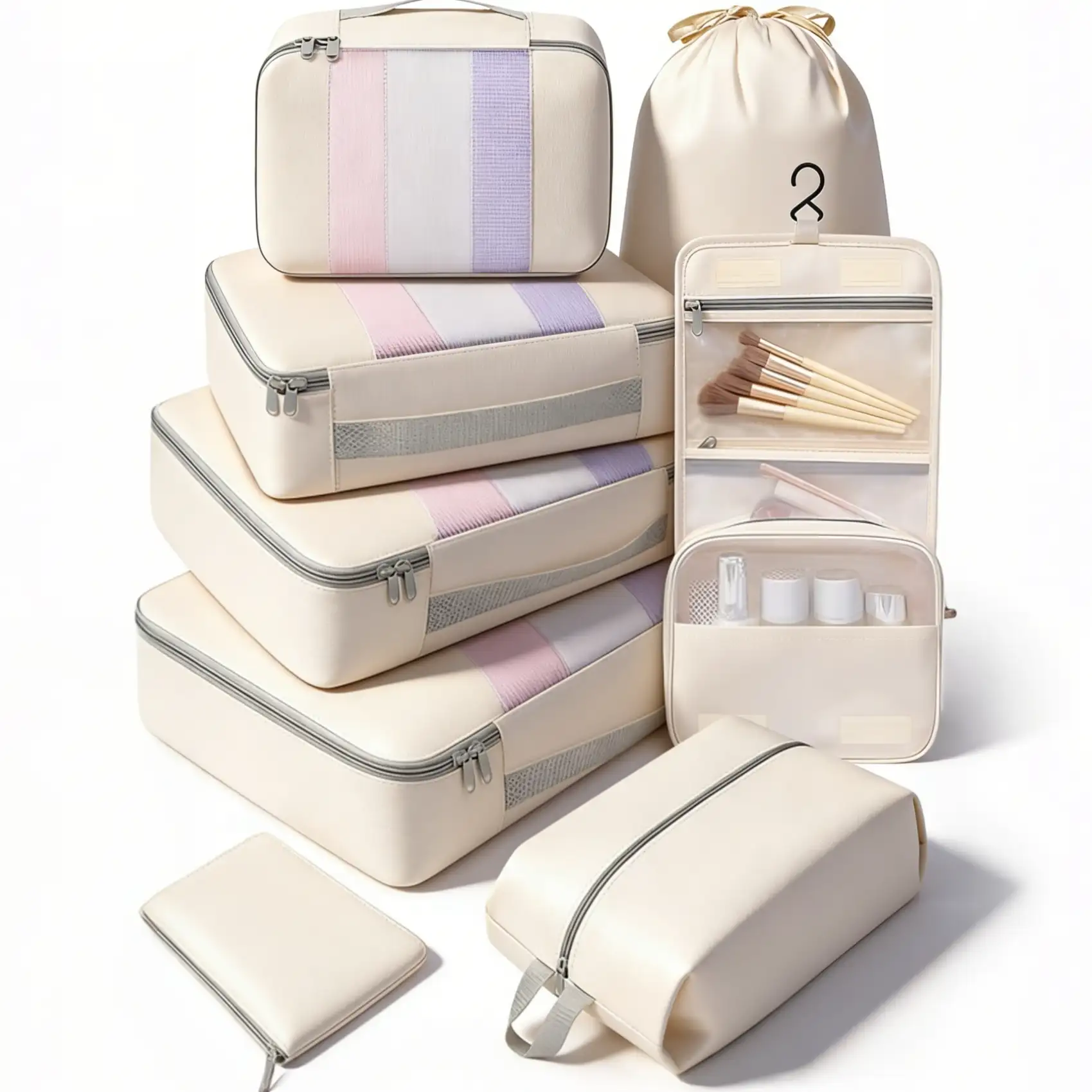
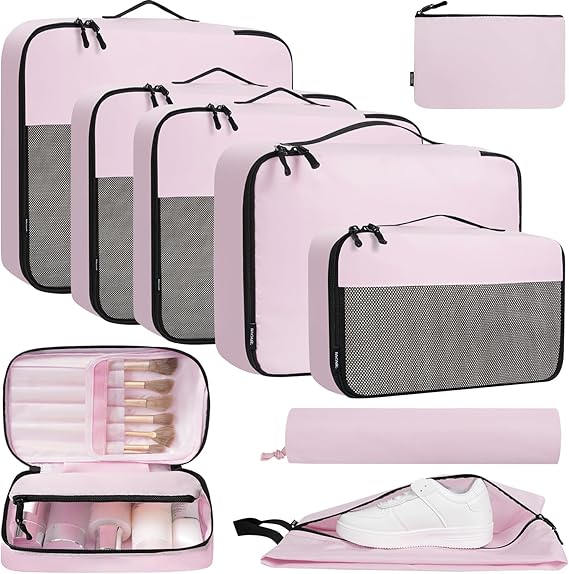
- Choose small, medium, and large cubes for different clothing categories and bulky items.
- Arrange cubes like a puzzle, placing heavier cubes at the bottom or near the wheels for stability.
Step-by-Step Guide: How to Use Bagail Packing Cubes
Sort and Categorize Clothes
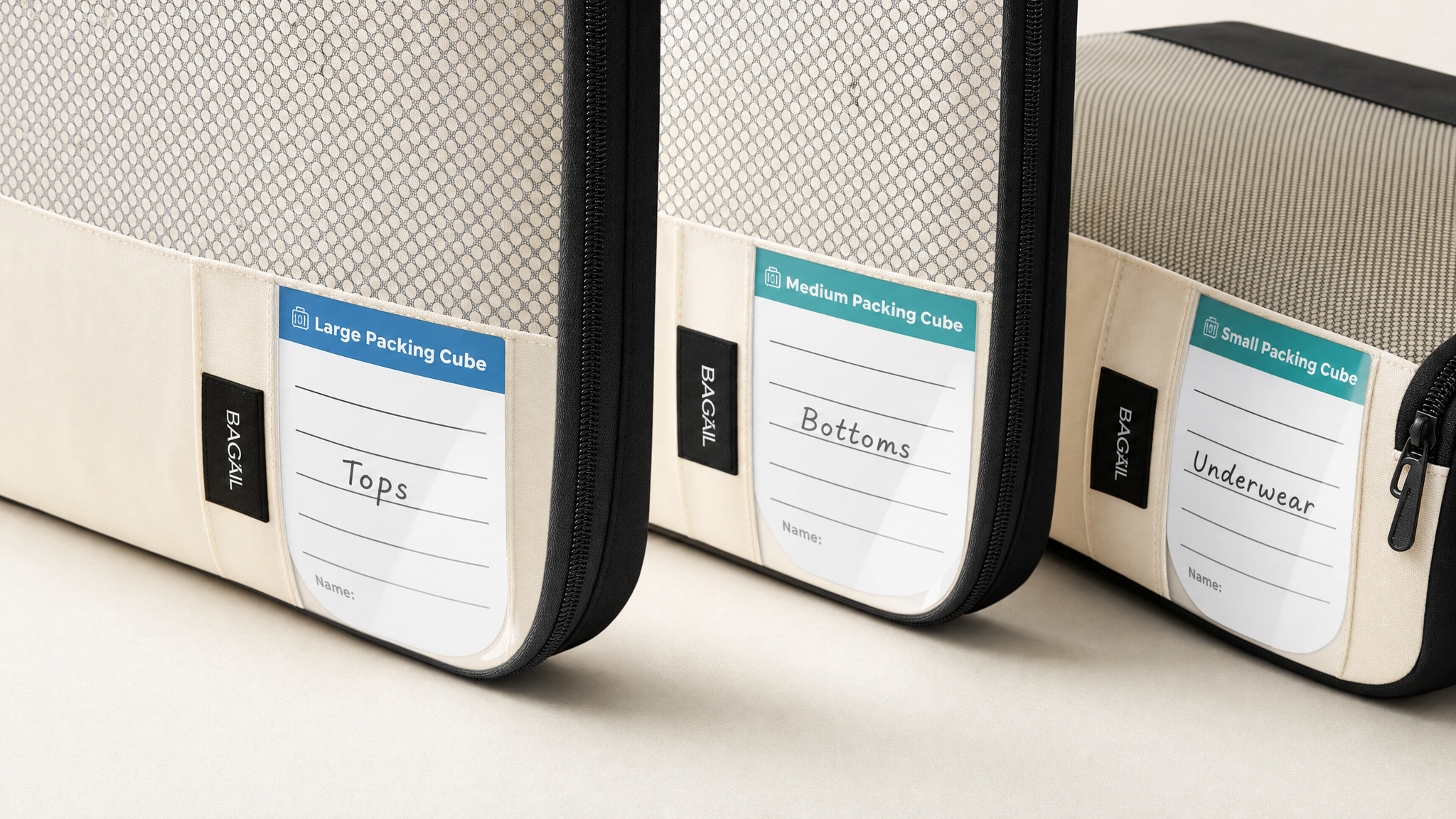
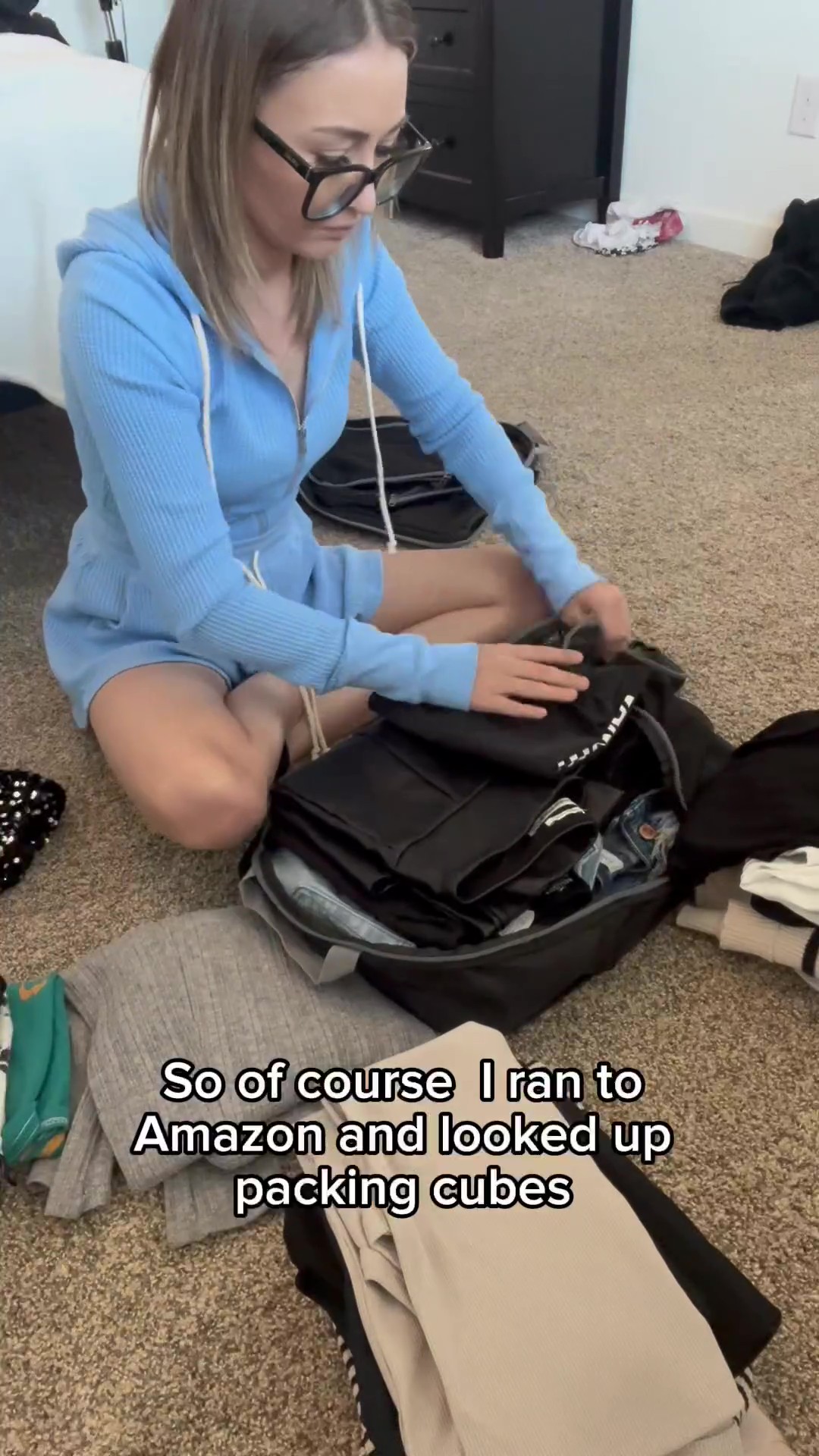
Start by grouping similar items together. Separate tops, bottoms, underwear, socks, sleepwear, bulky layers, shoes, and travel essentials so each group has a clear place. Sorting first prevents one cube from becoming a mixed pile and makes it easier to find items during the trip.
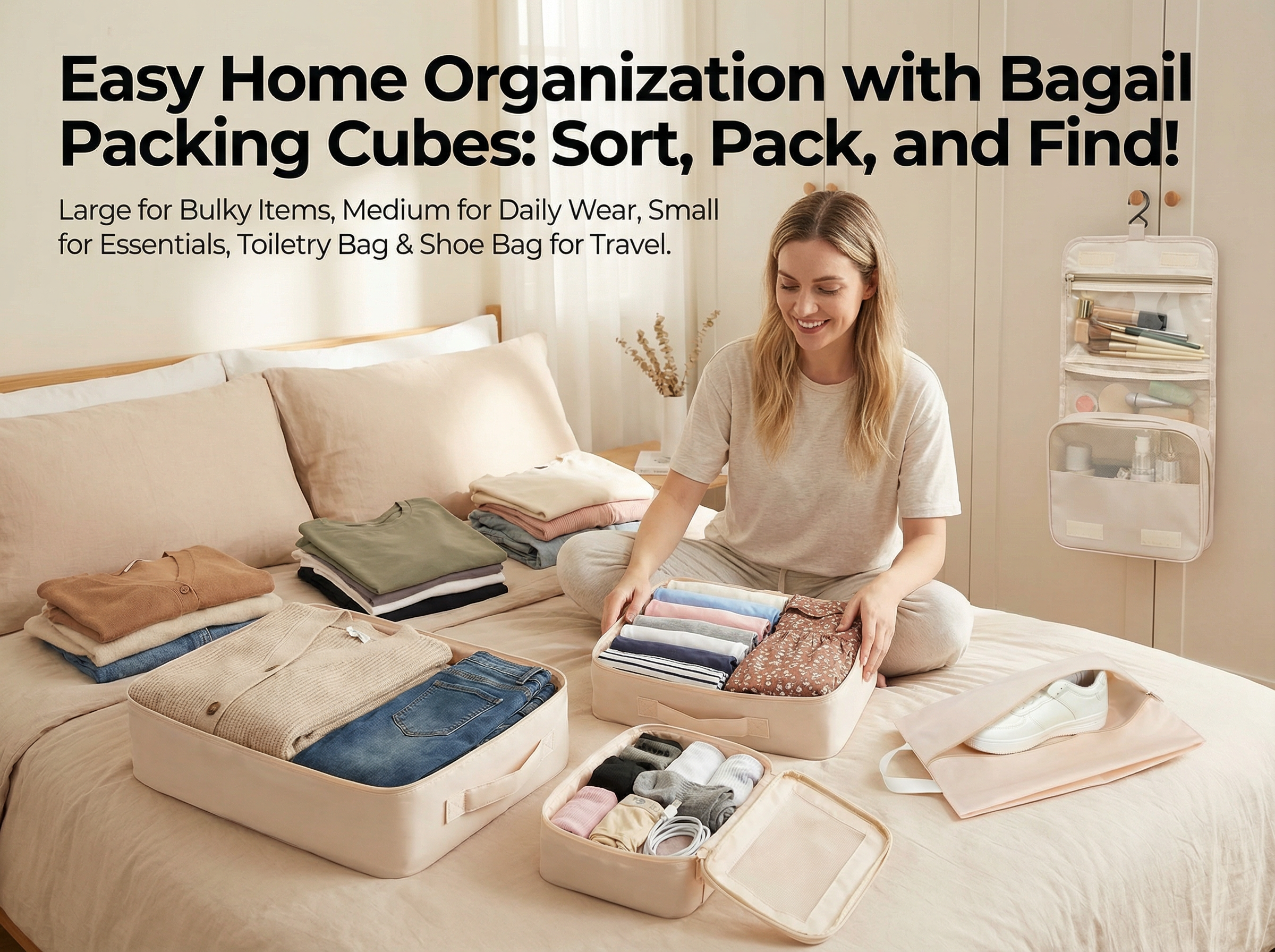
Group clothes by category before placing them into cubes.
Fold or Roll Clothing
Fold structured items and bulky garments neatly, and roll soft items such as T-shirts, knitwear, and sleepwear when rolling helps them fit more efficiently. Use both methods: folding helps maintain order, while rolling can reduce loose gaps and wrinkles for suitable fabrics.
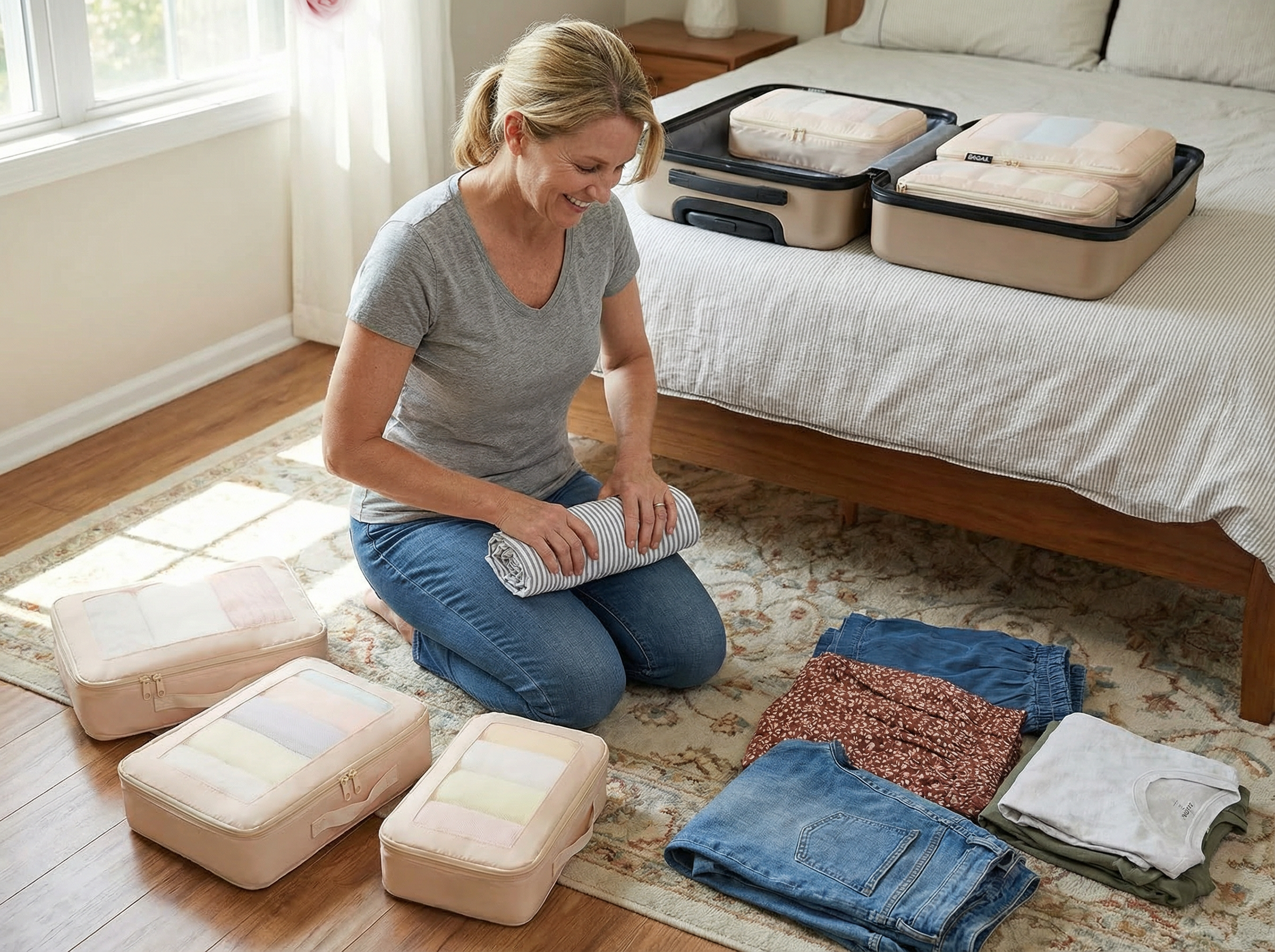
Combine folding and rolling based on the fabric and available space.
Pack Each Cube by Category
Place one category or a small set of related items in each cube. Avoid overfilling a cube so the zipper can close smoothly and the cube keeps a tidy rectangular shape. Leave frequently needed items in a small cube or an easy-to-reach part of the suitcase.
Keep categories separate so items are easy to locate.
Compress and Zip Securely
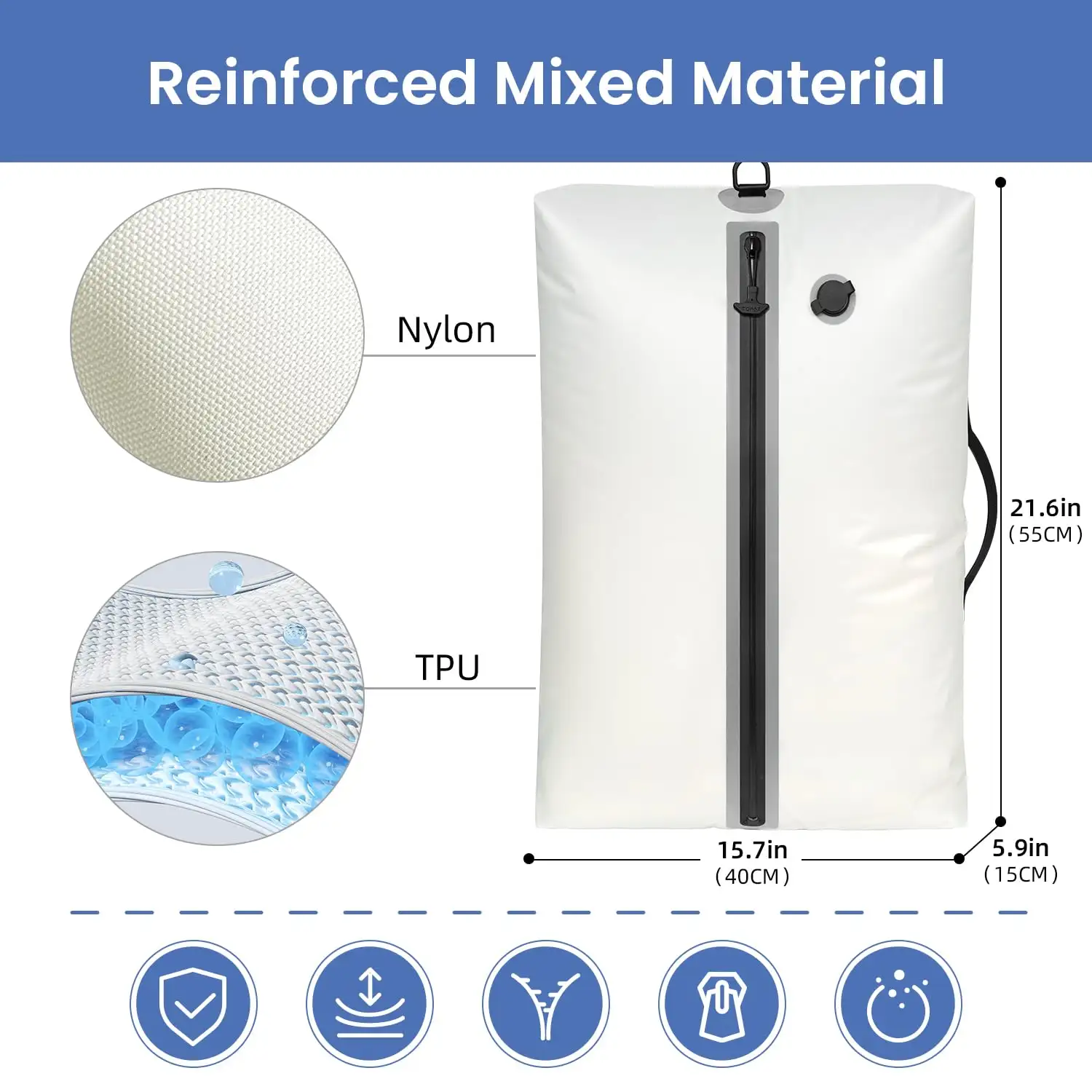
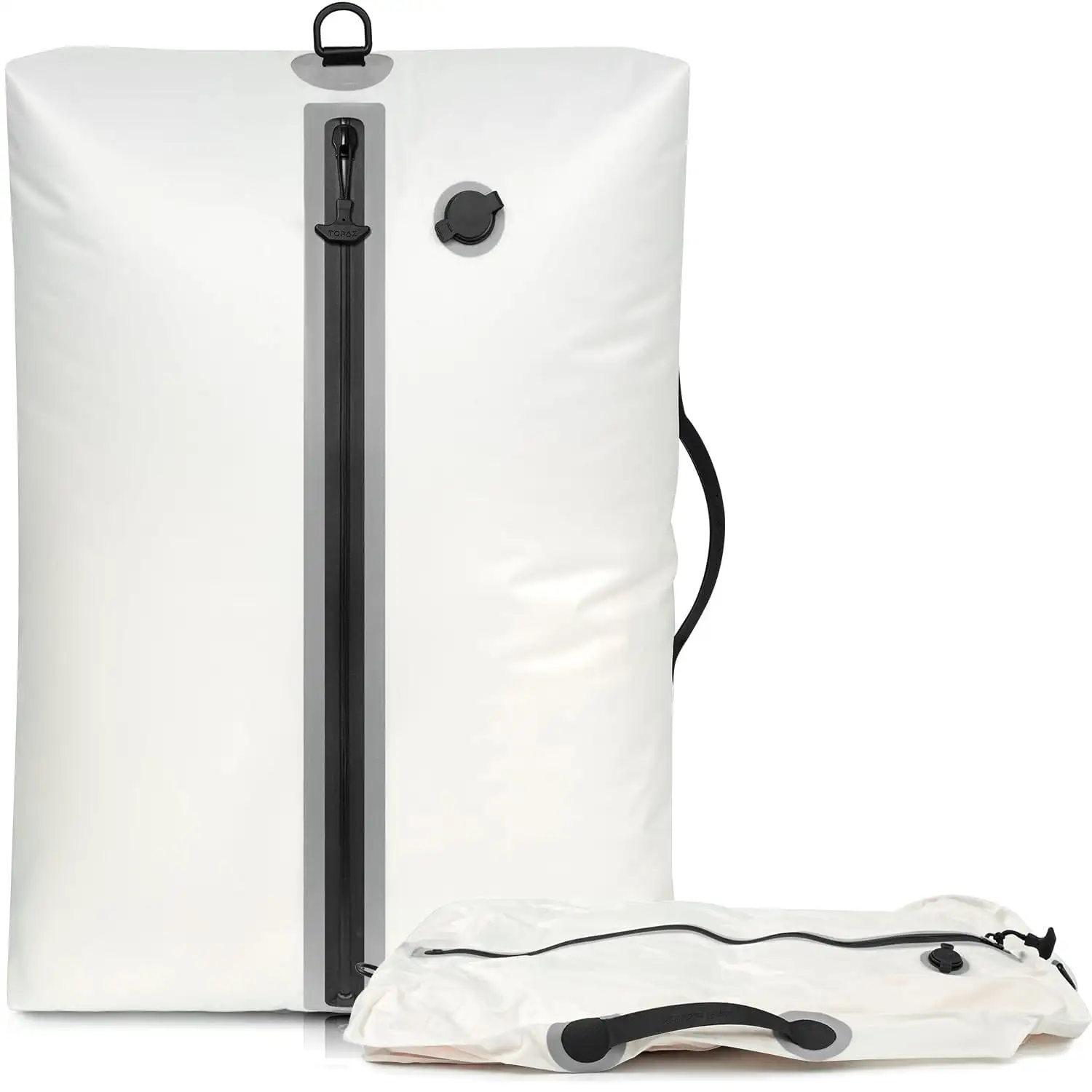
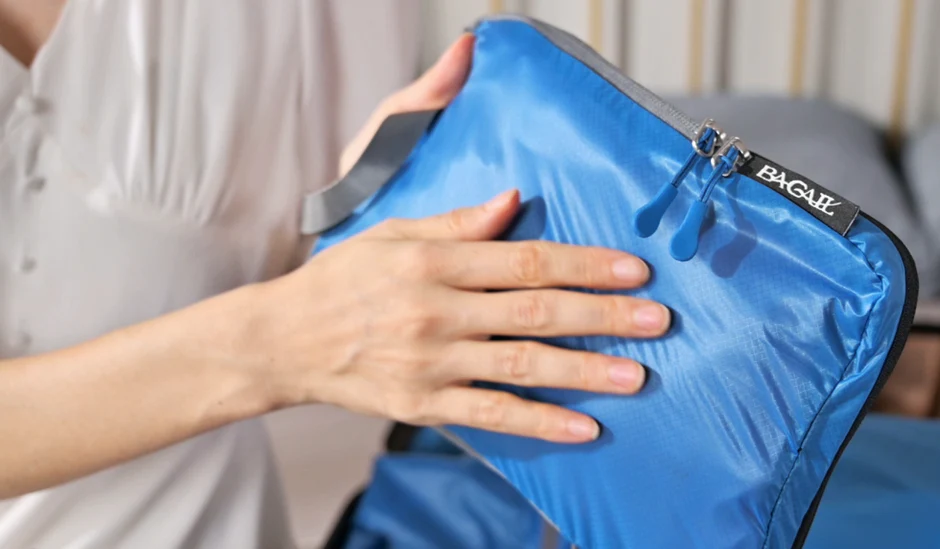
Press gently on the cube to remove excess air before closing the zipper. If using compression cubes, close the cube according to the product design so the fabric can flatten evenly. Do not force the zipper or pack sharp items against delicate fabric.
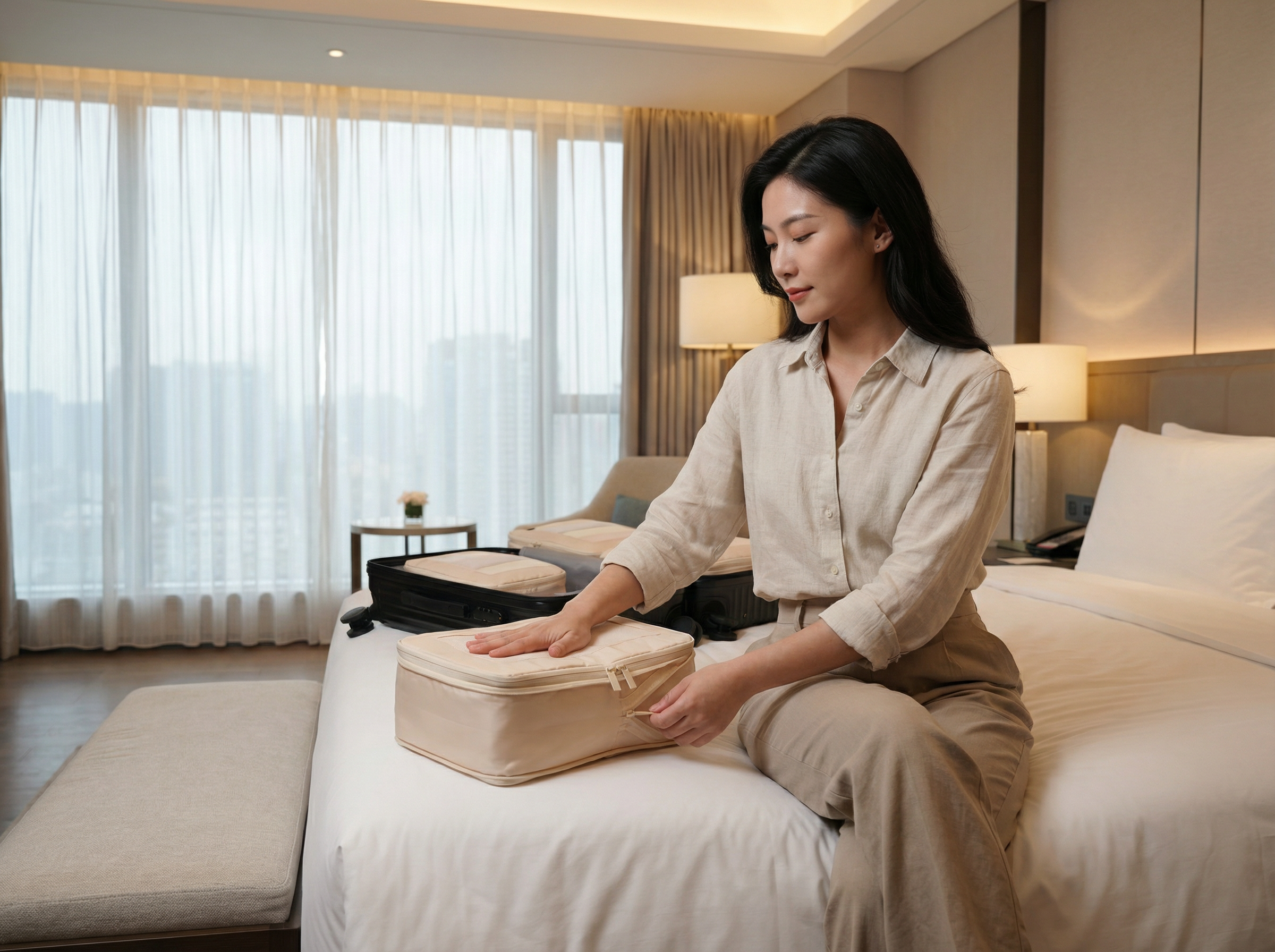
Close cubes smoothly so they stack and pack neatly.
Arrange Cubes in the Suitcase
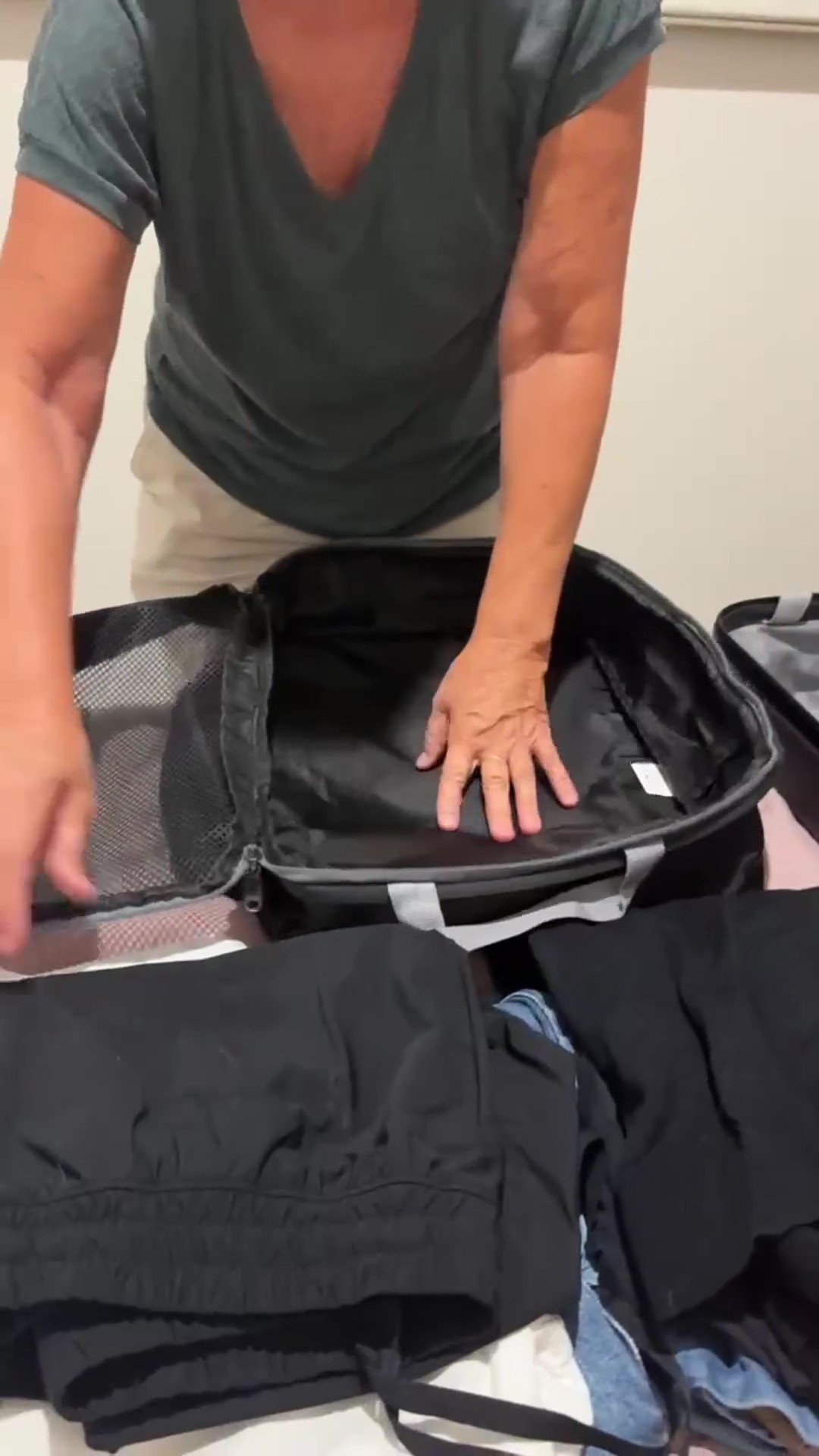
Place the filled cubes into the suitcase like a puzzle. Position heavier cubes low and near the wheels, fill gaps with small items, and keep the contents balanced. The goal is a flat, stable arrangement that does not shift when the suitcase is moved.
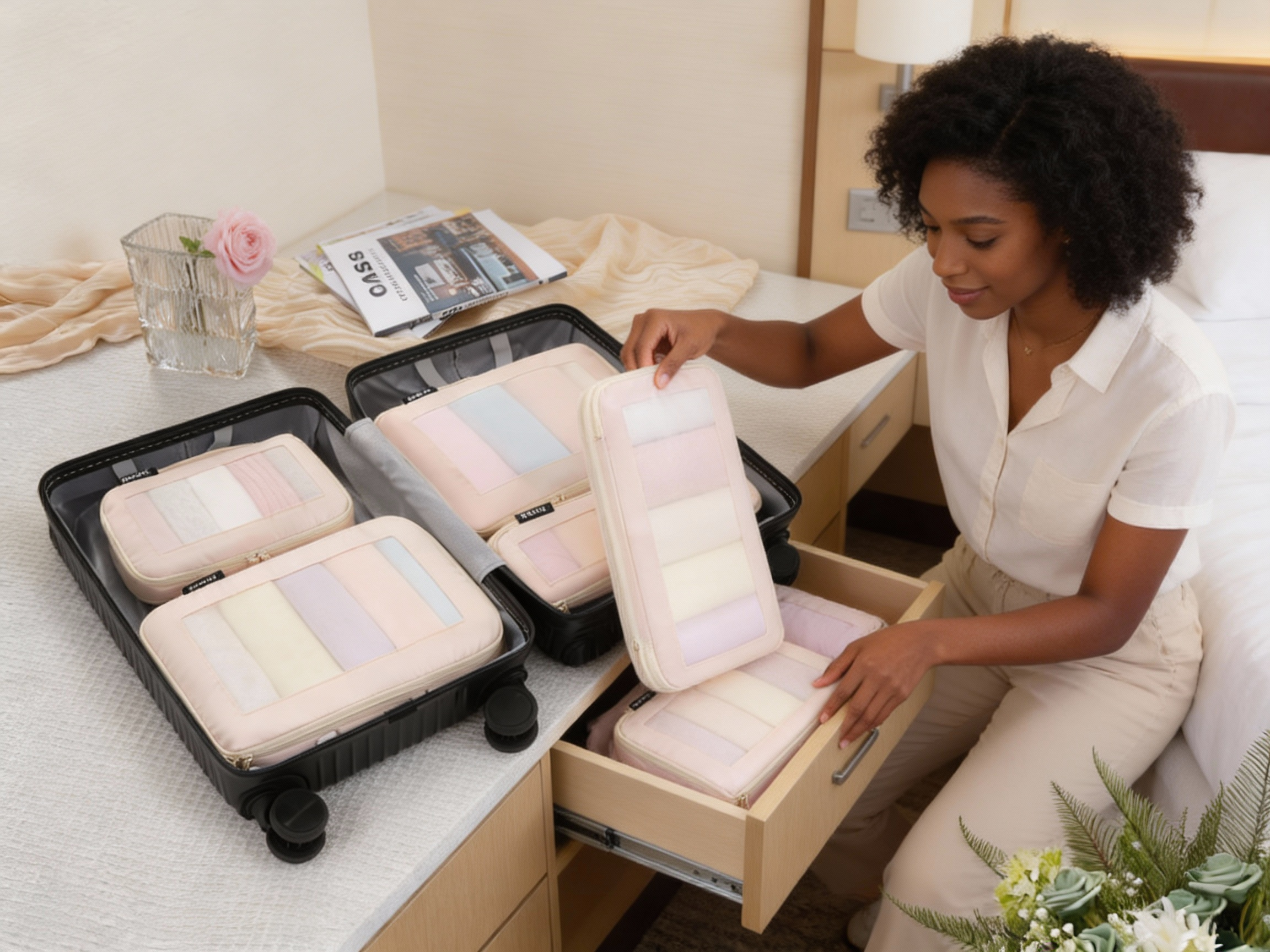
Use every gap while keeping the suitcase balanced.
Unpack Without Emptying Every Cube
When you arrive, packing cubes can move directly from the suitcase into a hotel drawer, shelf, or closet. This keeps folded clothes together, reduces time spent unpacking, and makes repacking simpler at the end of the trip.
Which Size Packing Cube Should You Use?
| Cube size | Best for |
|---|---|
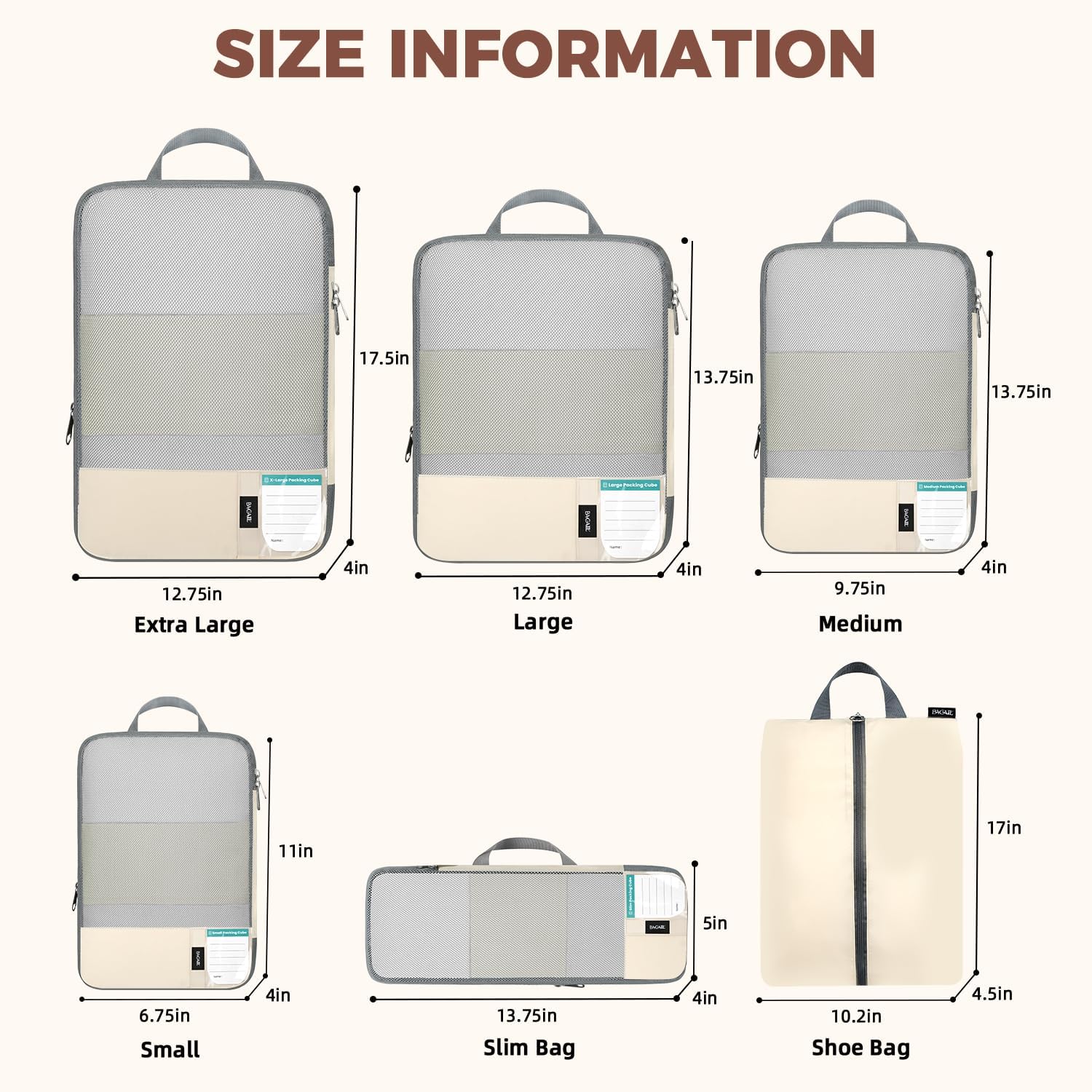
| Small cube | Underwear, socks, accessories, chargers, and small essentials |
| Medium cube | Daily wear, T-shirts, shorts, folded tops, and lightweight outfits |
| Large cube | Pants, sweaters, jackets, bulky layers, and larger folded items |
| Shoe bag | Shoes and dirty soles that should stay separate from clothing |
| Laundry or toiletry bag | Worn clothes, toiletries, or travel items that need separate storage |
The best division depends on trip length, suitcase size, fabric thickness, and whether you use compression cubes. Label categories mentally or keep similar cubes in the same part of the suitcase so packing and unpacking stay intuitive.
Packing Tips for More Organized Luggage
- Pack heavier cubes near the wheels or bottom of the suitcase.
- Fill small gaps with socks, accessories, or other soft items.
- Keep a clean outfit or essential items easy to reach.
- Separate shoes, worn clothes, and toiletries from clean clothing.
- Do not overpack cubes so tightly that the zipper strains or the fabric wrinkles excessively.
Frequently Asked Questions
Is it better to roll or fold clothes while packing?
It depends on the item. Fold structured or bulky garments when folding keeps them neat, and roll soft items such as T-shirts and lightweight clothing when rolling saves space. Using both methods is often the most practical way to reduce wrinkles and fill gaps.
What types of luggage packing cubes are there?
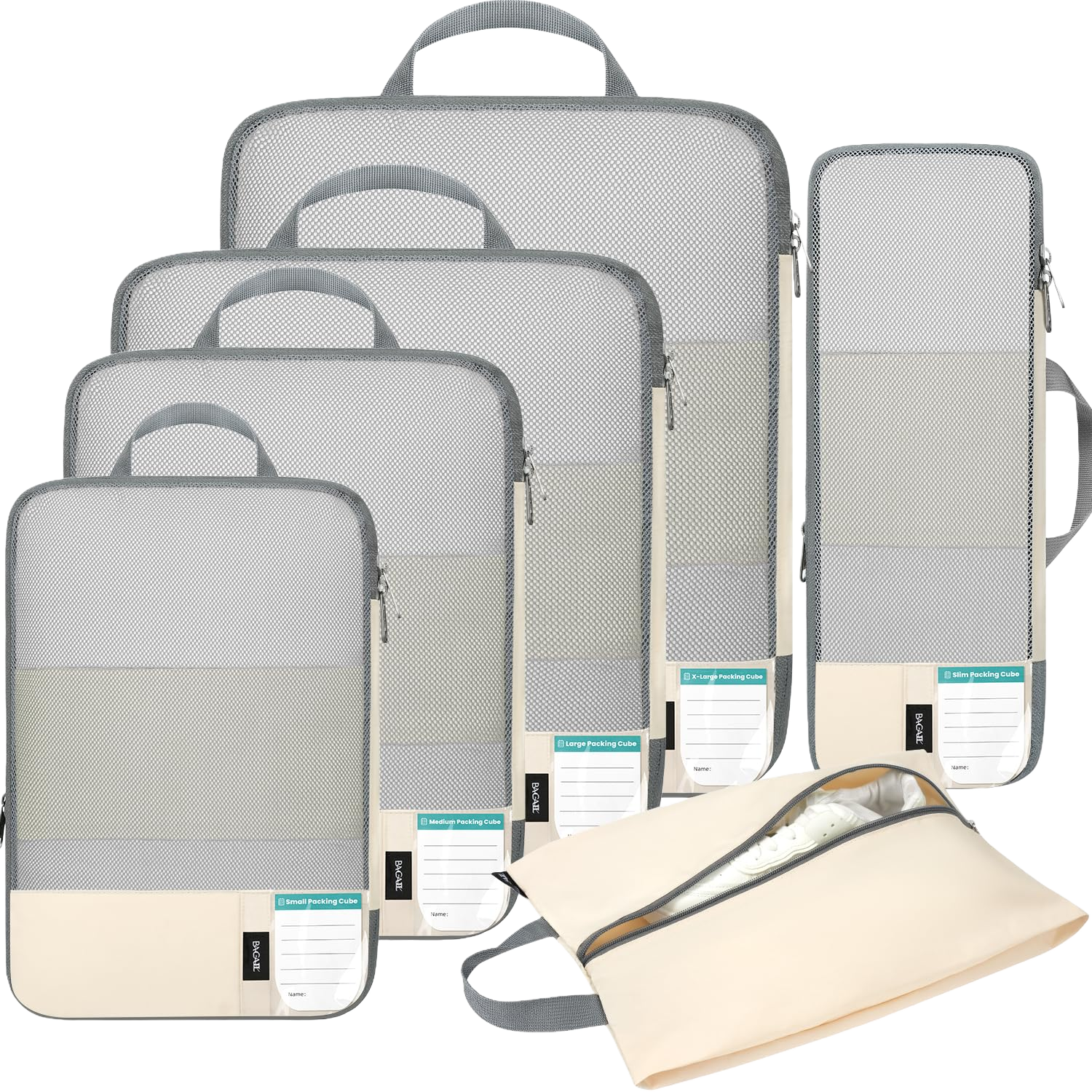
Common packing cube sets include small, medium, and large cubes, plus specialty bags for shoes, laundry, toiletries, and accessories. Compression cubes are designed to remove excess air and help contents lie flatter.
Do compression packing cubes really save space?
Compression packing cubes can reduce excess air and help soft clothing take up less room. They are most useful for lightweight fabrics and layered clothing, though they do not remove the physical bulk of very thick or heavy materials.
How many packing cubes do I need for carry-on luggage?
The number depends on trip length, clothing thickness, suitcase size, and cube dimensions. A practical approach is to use separate cubes for daily clothing, small essentials, and worn or specialty items, then adjust based on available carry-on space.
Do you usually pack clothes in checked luggage?
Clothes can be packed in checked luggage using the same sorting, folding or rolling, and cube arrangement method. Keep valuable, essential, or fragile items in carry-on luggage when possible and use checked space for clothing and other permitted items.
Do packing cubes increase luggage weight?
Packing cubes add a small amount of weight themselves, but they can help organize contents and reduce unnecessary loose items. Travelers concerned about weight should choose lightweight cubes and distribute heavier clothes evenly.
Source & Methodology
This guide is based on the original Bagail article “How to Use Packing Cubes to Maximize Space,” reorganized into direct answers, numbered steps, a size guide, and FAQ blocks.
Original Bagail article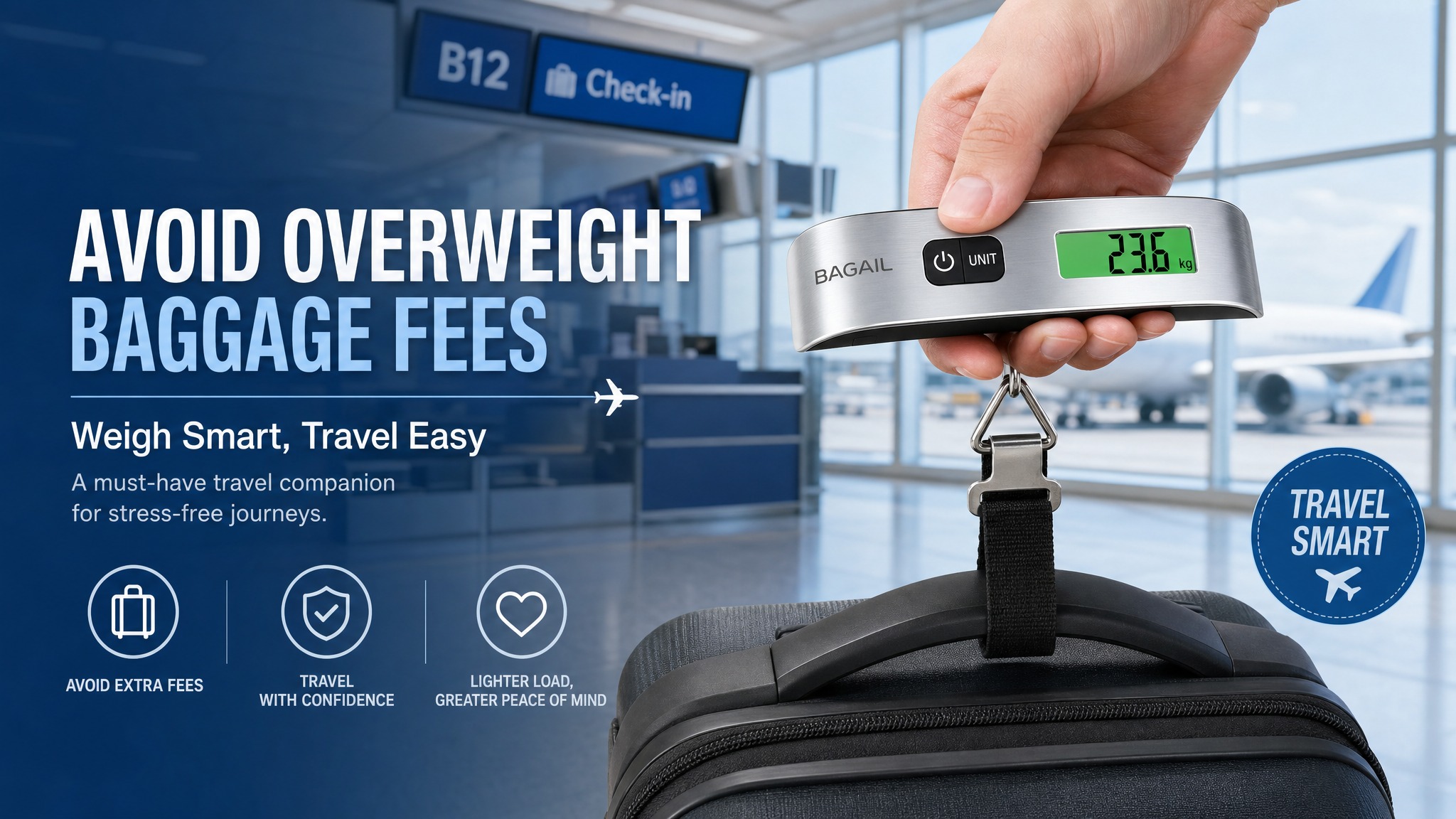

-7.png?w=1732&h=1732)